About the project
What we know
Intrauterine fetal death (IUFD) is defined in most guidelines as the death of a fetus from the 20th week of gestation onwards. It remains one of the most serious and most emotionally devastating outcomes in modern obstetrics. Recognised causes include placental pathology (vascular malperfusion, inflammatory lesions), fetal structural and chromosomal abnormalities, intrauterine infection, umbilical cord complications and acute obstetric events such as placental abruption. Genetic factors are estimated to underlie approximately 10–25 % of cases: chromosomal abnormalities (trisomies 21, 18 and 13, monosomy X) account for the majority, while monogenic disorders are identified in roughly 1–6 %.
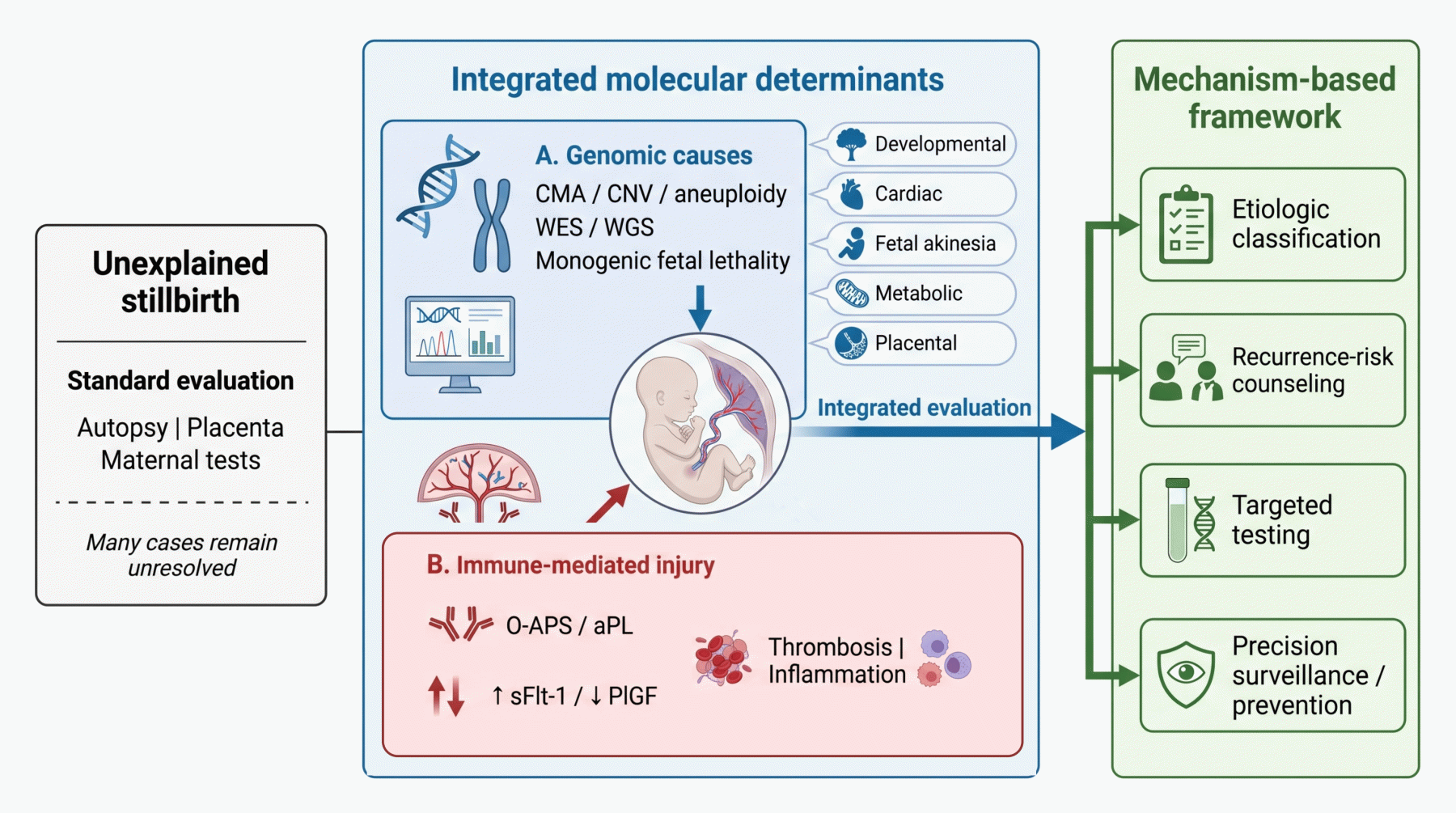
Over the past decade, chromosomal microarray analysis (CMA) has largely replaced conventional karyotyping, because it detects submicroscopic copy-number changes at far higher resolution and can be performed on non-viable or macerated tissue. Next-generation sequencing has extended the reach further: in cases with a normal CMA and no maternal or obstetric explanation, exome sequencing identifies a likely causative variant in about 8.5 %, bringing the combined yield of genetic testing to roughly 18 %. The genes involved span cardiac electrophysiology (e.g. long QT syndrome), neuromuscular function and fetal akinesia, metabolic homeostasis, early developmental pathways and placental function. Alongside these fetal causes, maternal immune-mediated mechanisms – above all obstetric antiphospholipid syndrome – represent a clinically actionable cause of placental failure and late fetal death, while inherited thrombophilias such as factor V Leiden, the prothrombin G20210A variant and antithrombin deficiency have been reported to increase the risk of stillbirth.
What remains unknown
Even after a complete post-mortem work-up, 25–60 % of stillbirths remain unexplained. Several gaps sustain this figure. Diagnostic yields reported in the literature are only partly comparable, because studies differ in gestational-age thresholds, in the depth of fetal and placental phenotyping, in sequencing strategy and in variant-classification practice. Interpretation is further limited by incomplete penetrance, by the high proportion of variants of uncertain significance, by the frequent absence of parental (trio) samples, and by the fact that genes essential for early human development remain systematically underrepresented in databases built on postnatally viable disease. Most importantly for this project, the spectrum of genetic pathologies in stillborn fetuses has never been analysed in the Slovak population. Slovak clinicians rely on data generated in countries with different prenatal screening systems, and no national guideline currently defines which genetic examinations should be performed after fetal death, or when.
What we want to do
The GIFD project sets out to determine the spectrum of genetic changes in fetuses that died from the 20th week of gestation in the Slovak population. Tissue from reproductive losses is analysed together with parental blood samples using QF-PCR, MLPA, Sanger and next-generation sequencing, array comparative genomic hybridisation or digital PCR. Detected variants are assessed for causality in the context of the parental genotypes, and correlated with fetal and placental histopathology in cooperation with pathologists, so that variable morphological presentations can be linked to the underlying genetic mechanism. All samples collected form a biobank available for further research.
The principal deliverable is a diagnostic algorithm: a tiered, methodologically simple and financially realistic testing pathway optimised for the abnormalities that are genuinely most frequent in stillbirths in Slovakia. It will be published in several methodological variants, so that individual departments can adopt it according to their own instrumentation, staffing and budget, and so that it can be implemented nationwide. For families, more precise etiological classification means better-informed recurrence-risk counselling and, where an actionable mechanism such as antiphospholipid syndrome is identified, a realistic prospect of targeted prevention in a subsequent pregnancy.